

By Howard Deevers
We have all heard that term: A Line in the Sand. In old Westerns or other movies, a “line in the sand” (or dirt) was used to signify a territory or area where crossing that “line” would be cause for a conflict or a fight. I can even remember two boys in a grade school class drawing a line in the dirt on the playground to settle some dispute they were having. I don't remember the outcome of that conflict. Just as well.
In aviation we have many “Lines in the Sand” at airports. These are lines that we should not cross without permission from the ground or tower controller, usually at places on the airport where conflicts with other aircraft could occur. Probably the most prominent line is the “Hold Short” line just before entering an active runway. Of course, we are talking about airports that do have control towers and ground controllers. Non towered airports also have lines, but we will get to them later.

Section 3 of your Airman Information Manual (AIM) is full of explanations and pictures of airport markings. You may even be asked questions about runway identification during a check ride. Your instructor should start explaining runway and taxi way marking and identifications on your first flying lesson. There is a lot of information to digest, and we don't expect you to learn it all in one lesson.
There is no sand at the airport. The lines we are talking about will be painted on the surface and in a design that you should easily identify. Just like everything else in aviation, signs and markings have evolved over time and standards have been made to be sure that signs and markings are all familiar to you no matter what airport you fly into. I do suggest that you spend a little time reading sections 2 of the AIM and find out those things that your instructor did not teach you.
And remember, at control towered airports we have assistance available to us at the push of a button. Never be afraid to ask for clarification of taxi, or take-off, instructions from your ground or tower controller. If you are not familiar with an airport, you can request “progressive taxi instructions” from Ground Control to help you get to where you need to be. They will help you.
It is not just paint on the pavement that we need to know about. There are six types of signs installed on airfields: Mandatory Instruction signs; Location Signs; Destination Signs; Direction Signs; Information Signs; and Runway Distance Remaining Signs.
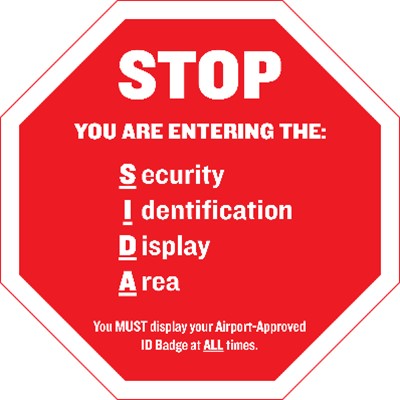
The really important signs will be a RED background with WHITE lettering, or numbers, such as the runway number you are about to cross or enter. In addition to that sign there will be a HOLD SHORT line on the pavement that will be two solid lines and two dashed lines. The solid lines are there as that “line in the sand” that you do not cross without permission from the tower or ground controller. The dashed lines are the lines that you must cross in order to be fully clear of the runway you just exited. At larger and busier airports where runway incursions have taken place, you may find additional indicators to get your attention. Some have in the ground flashing lights or lead up stripes to the hold short point. These are all designed to alert you that there is something very important at this point on the airport.
If any part of your airplane goes over this hold short line, it is considered a runway incursion, and will result in a violation. Consider it like running a red light in your car, and a police officer stops you. You are going to get a ticket for running that red light. If there is crossing traffic at that intersection you could cause an accident. If there is landing traffic on final approach to the airport and you cross that line, it could result in serious damage to two airplanes, or, if the Tower sees the incident and has the approaching traffic go around, you are still in violation. You have “crossed that line in the sand.”
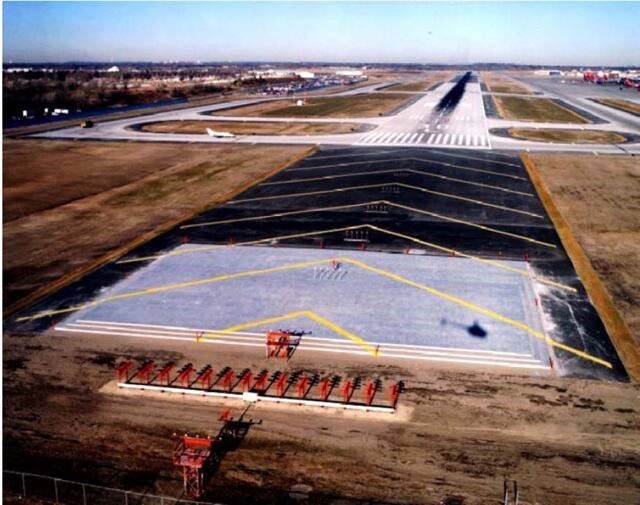
At non towered airports, the signs and markings may not be as prominent as those at a busy towered airport, but the meaning is still the same. The Arizona Pilots Association, and the FAASTeam have presented many seminars on operations at non towered airports. The FAA is working very hard to get all airports to have the same standard markings and signs. Once you understand the signs and markings at your airport, you should be able to go to any airport and feel right at home.
At control towered airports you can always ask the ground or tower to repeat or clarify any instructions. They may sound a bit annoyed at this, but that IS what they are paid to do. Another good way to learn about runway markings and signs, and the tower operations, is to ask for a Tower Tour. If you do ask, be sure to ask for a time when the Tower is not so busy. At larger, very busy airports, the controllers may not have the time to answer questions or explain operations and concerns. When they are not so busy, they will be happy to have you.
Your ARIZONA PILOTS ASSOCIATION has presented many seminars on runway incursions and will be doing that again. Check the website and look for a seminar near you. They are free and do count for the WINGS Program. And don't forget to “bring your wingman.”