

It looks like winter weather is here, and so far the mornings have been a bit crisp, but the flying has been great. It’s a good excuse to make a flight to get that $100 lunch or breakfast. I hope I’ll be seeing one of you at breakfast sometime soon.
MISCELLANEOUS ITEMS
FAA
The FAA has continued to receive field reports of cracked cylinders on various models of Continental 520 and 550 engines, in-spite of compliance with AD 2020-16-11. Because the FAA is concerned that the Airworthiness Directive (AD) is not sufficiently resolving the problem, they need additional input from the field to better understand the problem. The link to the Worthiness Concern Sheet is: https://www.faasafety.gov/files/notices/2022/Oct/FAA_ACS_Continental_Cylinder_Cracking.pdf. Please contact them if you have information that can help them resolve the problem.

Prior to 2010, aircraft registrations did not expire as long as the aircraft remained in service, but that regulation had led to many inaccurate and ghost registrations, and the three-year limit for re-registration was enacted in 2010. Because of requests from user groups, in the FAA Reauthorization Act of 2018, Congress directed the agency to extend the three-year period to seven for noncommercial general aviation aircraft. Because the FAA could not easily distinguish between commercial and noncommercial general aviation aircraft, the FAA is extending the registration duration for all aircraft to seven years. The new registration extension will take effect following a 30-day comment period, and will apply to all aircraft currently registered under the existing FAA regulations. While all registrations that are valid on the effective date will be extended to seven years after they were issued, those registrations that are currently expired will first need to be renewed.
The FAA has announced that the administrator has signed the final rule that will have a significant impact on commercial balloon operators. The rule will now require commercial balloon pilots that are carrying passengers for hire to have a valid medical certificate. The new rule will now also include BasicMed provisions that will allow pilots to fly as a safety pilot, and it will also allow pilots to act as pilot in command during a special medical flight test authorized under FAR Part 67 without holding a medical certificate. This revised rule will become effective 30 days after its publication in the Federal Register.
AIRSPACE
Fortunately, there aren’t any airspace or rules changes being planned that I’m aware of.

The airport staff and City of Marana are still on course to have a control tower established at Marana Regional Airport by late 2024. When this occurs perhaps it may resolve some of the parachute drop zone issues that presently exist. Presently, some parachute jumpers are landing in the area between runway 12-30 and taxiway C. Under some wind conditions jumpers have passed through the downwind pattern or over the active runway at altitudes that could potentially result in a collision between the jumper and an aircraft. With that in mind, keep a careful watch out for parachute jumpers when flying in or out of Marana Airport (and others).
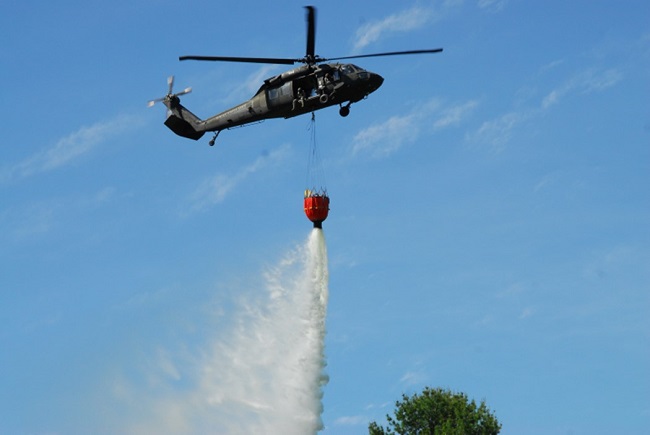
We have been reminded that the Army National Guard helicopter unit has a Picacho staging area a few miles east of Picacho Peak. This staging area is not very well defined on the charts, and as a result many pilots, unknowing, will fly over the area at low altitude, and thus cause a disruption of operations. To prevent this disruption from happening, they are suggesting that within four miles of the site, pilots fly over 3000 AGL over the site or call their tower on 126.2 for a clearance to fly through their area. In the meantime, they are attempting to establish a class Delta Airspace to more clearly define the staging area airport.
SAFETY
In this reporting period the number of accidents and incidents were down, and the injuries incurred were not severe. I hope this trend will continue through the rest of the year and into the next. For a detailed report of all the accidents and incidents that have occurred, see my Accident & Incident Summary report located elsewhere in this newsletter.
Members, please do continue to send accident information to This email address is being protected from spambots. You need JavaScript enabled to view it. with the date, location, aircraft make, and type, if anyone got hurt, and with as much detail as possible. Thank You.
It was a pleasant surprise to see that the number of pilot deviations have gone this past reporting period. I just hope this trend will continue. Pilots always need know what type of airspace they are flying in, or are about to enter, and understand what ATC may expect from them. When flying in controlled airspace, don’t try to be creative and do something without first talking to ATC. It would help if pilots would read the Airman’s Information Manual (AIM), brush up on the “high points,” and most importantly, don’t commit a pilot deviation.
The summary of the general aviation deviations committed this reporting period are as follows:
| One IFR Deviation | Zero Brashers |
| One Class Bravo Airspace Deviation | Zero Brashers |
| One Class Delta Airspace Deviation | Zero Brashers |
| One Movement Area Deviation | Zero Brashers |
| Two Air Traffic Control Instructions | 1 Brasher |
| Three Runway Incursions | 1 Brasher |
| Two Surface Incidents | 1 Brasher |
For the details, see my Pilot Deviations Report elsewhere in this newsletter.

CONSTRUCTION
Many airports around the state have repair/construction projects under way. However we don’t have the latest status on all these projects, so always check for NOTAMs at your destination airport to determine what may be happening. Always be cautious and always fly informed.
APA works with many airports around the state assisting with the updating of their Airport Master Plans by providing the pilot, and aircraft owner’s perspective in the process. Casa Grande Municipal Airport just completed their masterplan meetings. The consulting firm, Coffman and Associates, will be finalizing the report, and submitting the plan to the FAA for approval the first of next year.
THINGS TO DO - PLACES TO FLY FOR BREAKFAST:
 The fly-in breakfast at Coolidge Municipal Airport (P08) is on the first Saturday of the month.
On the second Saturday, consider flying down to Ryan Field (RYN) near Tucson for breakfast or lunch at Ritchie’s Restaurant. They are open from 6 am to 2 pm to serve you.
The Falcon Field Warbirds Squadron fly-in breakfast is on the third weekend of the month.
Grapevine is open full time, but the third Saturday of each month is a special time for a group camp dinner on Saturday evening. Come and camp for the weekend! The camp host will prepare the main course, and campers, please bring a side dish or dessert to share. Grapevine, which lies within a National Forest, is heavily used by the Forest Service for fighting wildfires and the Military for Special Training.
On the last Saturday of the month a fly-in breakfast is continuing to be put on by the Casa Grande Masonic Lodge in the air-conditioned Terminal of the Casa Grande Airport. Apparently, the upgrading of the lunch area has yet to meet inspection requirements. Hopefully it won’t be too long before it can come online.
Check with the APA Getaway Flights program and online calendar for fun weekend places to fly.