
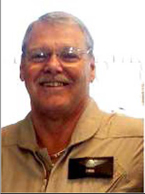
By Fred Gibbs
As you all know, time waits for no man or woman. It seems like it is slowly catching up with me. The other day I looked in the mirror and was wondering “who is that old, tired guy looking back at me?” Having to admit, “Yup, that is really you,” does not sit well with me, but one must look life in the eye and accept the truth. It may be time to retire – again, for the 3rd time! 3rd time? Let’s see, first 10 years a combination of military, college, and private industry, a 30-year FAA air traffic control career, and 20 years of consulting. Flying since 1972, instructing since 1976, a safety counselor and FAASTeam Lead Rep since 1974’ish, a contributing member of the Arizona Pilots Association for the past 14 years, a NAFI Master Flight Instructor twice, and a recipient of the FAA’s Wright Brothers award for 50 years of safe flying. All in all, a pretty great life. Along the way I have made quite a few friends all across the country and all across the aviation world and I would like to think I have made some positive contributions to aviation overall. Heck, I even got my name on the Walk of Fame at the Smithsonian Udvar-Hazy Air and Space Museum out at the Dulles International airport, but all that was then, and now it is now!
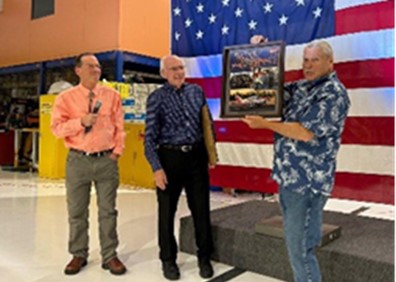
This past August I celebrated – or suffered through – my 80th birthday. That’s me, an octogenarian! I even got a membership in the Flying Octogenarians, including a hat, courtesy of fellow APA member, Howard Deevers. (PS - my hat collection continues to grow even though I do not wear hats!) Most of you know I still do a lot of flying up here in Flagstaff, running the flight School for Wiseman Aviation. Let’s see, is 500 to 600 flight hours, about the same amount of ground instruction, and over 100 instrument approaches every year enough to keep me sharp at 80 years young?

After 39 years, I no longer own an airplane. The insurance to cover me and my Bellanca Super Viking, my trusty ol’ stead the “Speed monster,” went sky high, and the time had come to part with it. I knew that day would come eventually, so no tears shed, and a start of a new part of my life. You don’t need to feel sorry for me though, I have access to many other aircraft and/or friends willing to fly me anywhere I want to or need to go. The money saved – a fair amount, I might say – is now going into our vacation travel kitty, the next step in retirement.

GAARMS will be no more, after 14 years of tracking, reporting, and analyzing the fatal accidents across the state for all our members every month since 2009. Hopefully, someone else will step forward to pick up the torch. Sadly, in my opinion, the number of face-to-face safety programs also seem to be dwindling in the face of webinars, and I hope APA will continue to push those face-to-face safety programs. They really do matter!
However, I am NOT walking away cold turkey! I will continue to contribute to the newsletter, flight instruct, do occasional safety programs and other related stuff, just NOT so much. I want to be around long enough to see my daughter retire from her FAA upper management position back in FAA headquarters, and see my stepson acquire his captain rating in the airline industry. My plan is to make it to 100 years young……
Discussion point: Remembering our Veterans…
This is a wonderful true story. You will be glad that you read it, and I hope you will pass it on.
It happened every Friday evening, almost without fail, when the sun resembled a giant orange and was starting to dip into the blue ocean. Old Ed came strolling along the beach to his favorite pier. Clutched in his bony hand was a bucket of shrimp. Ed walks out to the end of the pier, where it seems he almost has the world to himself. The glow of the sun is golden bronze now. Everybody's gone, except for a few joggers on the beach. Standing out on the end of the pier, Ed is alone with his thoughts...and his bucket of shrimp.
Before long, however, he is no longer alone. Up in the sky a thousand white dots come screeching and squawking, winging their way toward that lanky frame standing there on the end of the pier. Before long, dozens of seagulls enveloped him, their wings fluttering and flapping wildly. Ed stands there tossing shrimp to the hungry birds. As he does, if you listen closely, you can hear him say with a smile, 'Thank you. Thank you.' In a few short minutes the bucket is empty. But Ed doesn't leave. He stands there lost in thought, as though transported to another time and place. When he finally turns around and begins to walk back toward the beach, a few of the birds hop along the pier with him until he gets to the stairs, and then they, too, fly away. And old Ed quietly makes his way down to the end of the beach and on home.
If you were sitting there on the pier with your fishing line in the water, Ed might seem to be, as my dad used to say, like 'a funny old duck'. Or, to onlookers, he's just another old codger, lost in his own weird world, feeding the seagulls with a bucket full of shrimp. To the onlooker, rituals can look either very strange or very empty. Sometimes, us old folks often do strange things, at least in the eyes of Boomers and Millennials. Most of them would probably just write Old Ed off as just another strange old codger. That's too bad. They'd do well to know him better.
His full name: Eddie Rickenbacker.
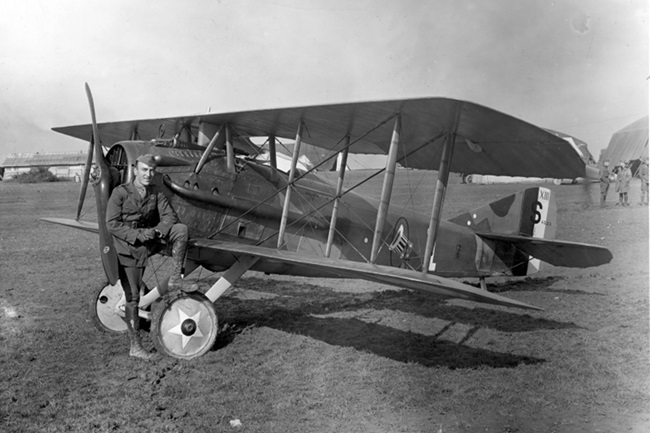
He was a famous hero in both World War I and World War II. During World War II, on one of his flying missions, he and his seven-member crew of their B-17 had to ditch somewhere in the middle of the Pacific. Miraculously, all of the men survived, crawled out of their plane, and climbed into a life raft. Captain Rickenbacker and his crew floated for days on the rough waters of the Pacific. They fought the sun. They fought the sharks. Most of all, they fought hunger and thirst. By the eighth day their rations ran out. No food. No water. They were hundreds of miles from land, and no one knew where they were or even if they were alive. Every day across America millions wondered and prayed that Eddie Rickenbacker might somehow be found alive.
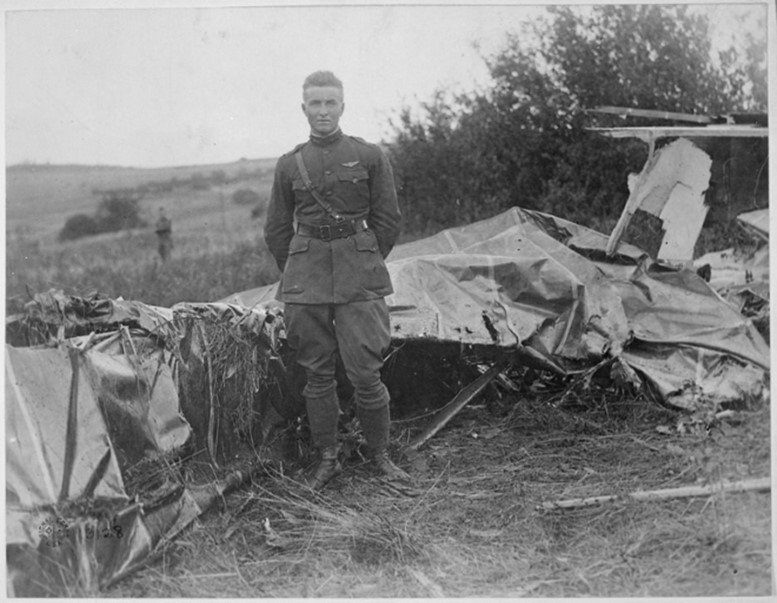
They needed a miracle. That afternoon they had a simple devotional service and prayed for a miracle. They tried to nap. Eddie leaned back and pulled his military cap over his nose. Time dragged on. All he could hear was the slap of the waves against the raft. Suddenly, Eddie felt something land on the top of his cap. It was a seagull! Old Ed would later describe how he sat perfectly still, planning his next move. With a flash of his hand and a squawk from the gull, he managed to grab it and wring its neck. He tore the feathers off, and he and his starving crew made a meal of it - a very slight meal for eight men. Then they used the intestines for bait. With it, they caught fish, which gave them food and more bait....and the cycle continued. With that simple survival technique, they were able to endure the rigors of the sea until they were found and rescued after 24 days at sea.
Eddie Rickenbacker lived many years beyond that ordeal, but he never forgot the sacrifice of that first life-saving seagull... And he never stopped saying, 'Thank you.' That's why almost every Friday night he would walk to the end of the pier with a bucket full of shrimp and a heart full of gratitude.
PS: Eddie Rickenbacker was the founder of Eastern Airlines. Before WWI he was a race car driver. In WWI he was a pilot and became America's first ace. In WWII he was an instructor and military adviser, and he flew missions with the combat pilots. Eddie Rickenbacker is a true American hero.
And now you know another story about the trials and sacrifices that brave men have endured for your freedom. And why we should never forget Veteran’s Day!
QUIZ OF THE MONTH : (Answers at the bottom of the Safety Program section.)
- Ok, you just departed out of the Phoenix area heading up to Flagstaff at 9500 feet indicated and getting Flight Following from Phoenix Approach on a nice beautiful VFR day. Out of nowhere, Phoenix asks you for your altitude. You say 9 point 5. Phoenix says your Mode C says you are at 14,200, stop squawking Mode C. How do you do that?
- Turn off your transponder
- Turn off your ADS-B
- Squawk 1200
- Turn Transponder to “ON”
- Uh oh!!! Do I have a problem here? I just landed – a little hard this time – and as I clear the runway, tower asks me to check my ELT because they they just started to hear an ELT signal? You can hear it in the background of the tower controller. How do you check it?
- Recycle your master switch.
- Change frequency on your radio to ground
- Disconnect the ELT.
- Reset your ELT switch.
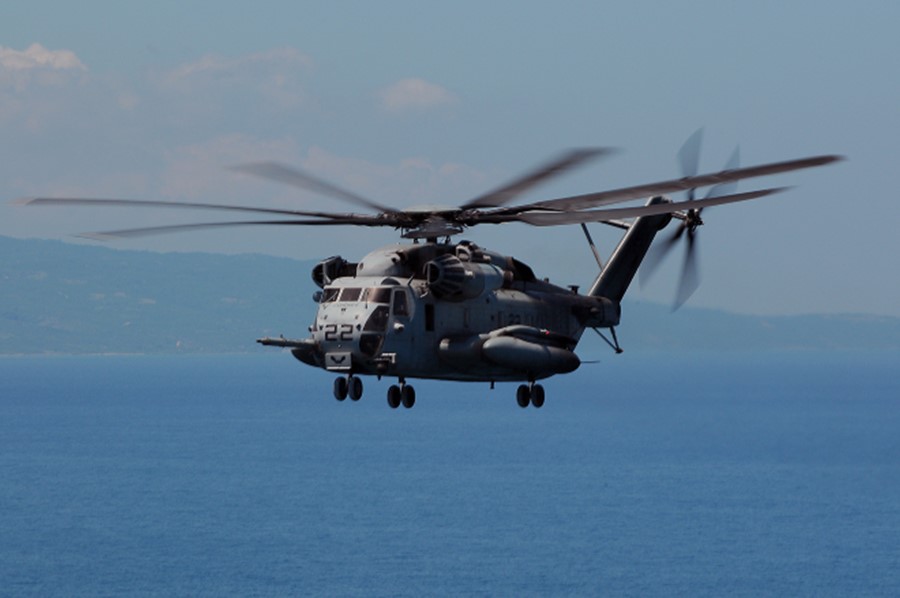 Why is the tail rotor on the Sikorsky CH-53 Super Stallion tilted so much, instead of vertically straight up like most helicopters?
- Cool design
- Straight up made it too tall to meet specs
- It had to counter the cyclic retreating blade syndrome of the main rotor.
- It was to help keep the helicopter within it center of gravity.
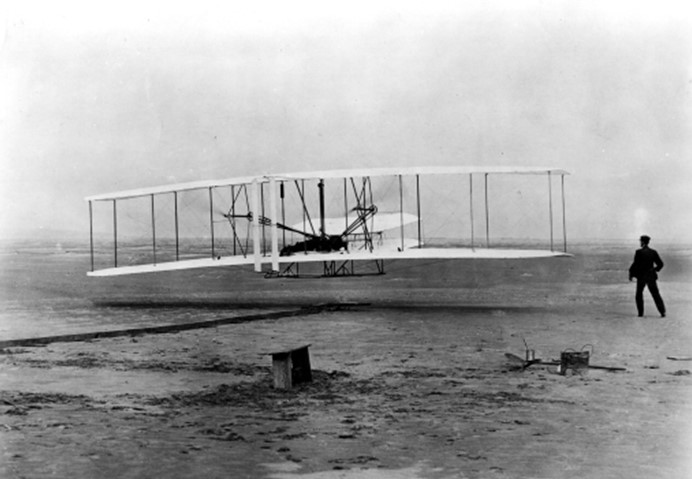 What manned aircraft holds the current world speed record? (PS – it’s Not the one in the picture!)
- Mig-15F
- SR-71
- X-15
- X-37B
- Both Lycoming and Continental Engine manufacturers have published letters on cold start procedures that include a recommended temperature at which they say when and how pre-heating your engine should be done. Select the correct answer:
- 32 degrees Fahrenheit
- 32 degrees Fahrenheit and wind chill is below 25 degrees
- 20 degrees Fahrenheit
- 2 degrees Centigrade
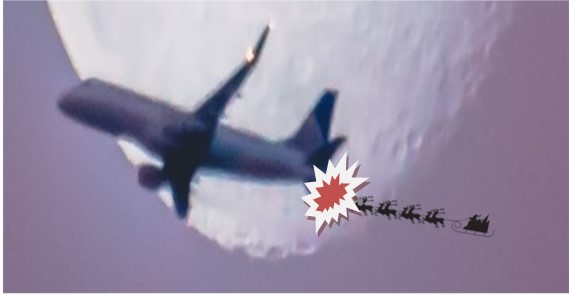 Santa is coming, flying a very long cross country and apparently extremely very fast, very high, but yet, with many stops. His sled is powered by 8 reindeer plus a booster with a red anti-collision light. Since a certified mechanic is required to maintain my engines, who maintains Santa’s power plants and what certification must they have?
SAFETY PROGRAMS
Simply log on to the Internet and go to WWW.FAASAFETY.GOV, click on “Seminars” and start checking for any other upcoming seminars. Should you desire a particular safety or educational program at your local airport or pilot meeting in the future, such as the BasicMed program, our “Winter Wonderland” snow season special, ”The Aging Pilot”, Radio Phraseology, or my newest one on LIFR approaches, which discusses the how’s, why’s, and pitfalls of shooting an approach all the way down to minimums and missed approaches, simply call or text me at 410-206-3753 or email me at either This email address is being protected from spambots. You need JavaScript enabled to view it. or This email address is being protected from spambots. You need JavaScript enabled to view it..
Arizona Pilots Association provides the safety programs at no charge. We can also help you organize a program of your choice, and we can recommend programs that your pilot community might really like. There are also a lot of great webinars online, each about an hour long, and worth credits towards your WINGS participation. You might find one that is right up your alley or really “tickles yer fancy”!!
Answers:
- d. Most older transponders give you options on the power knob to select a Mode, i.e., OFF, standby (SBY), ON, ALT (Mode C) and test (TST).
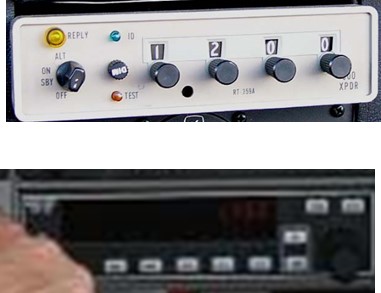
Some of the newer ones, like the Garmin one shown here, have buttons instead of knobs, and include a button for putting in your VFR 1200 code with a push of the button. And, if you accidentally pushed it, a second push brings up the old code that was set in before you changed it.
So, SBY/STBY powers up your transponder but does NOT send out any code, ON sends out the code without any altitude information, and, obviously, ALT sends your altitude with whatever code you put in. Mode C is altitude reporting, so to turn off the mode C altitude reporting, simply go back to ON.
- d. YUP, simply reset the ELT switch. You may have to turn it off first, then reset, or some just require pressing the reset button. Tune your radio to 121.5 and listen. If it is you, the ELT signal will stop.

- d. A helicopter must be balanced. If the front is much heavier than the tail, then it can't fly safely as the nose is too low. If the tail is too heavy, then the same. The point of balance is called the center of gravity. The tail boom on a helicopter is very long. If you were to add one pound to the tail vs one pound to the nose, the pound on the tail would provide more impact due to the length of the tail boom. In engineering this is called the "moment arm". By canting the tail boom, the tail rotor actually provides additional lift to the tail boom. There isn't that much lift, but since the tail boom is so long it has a pronounced effect. This gives the aircrew more latitude in loading the helicopter. With the extra lift provided by the tail rotor, we can put more load (troops, fuel, etc.) behind the rotor mast and still keep the center of gravity in acceptable limits.
- c. 1: North American X-15. This aircraft has the current world record for the fastest manned aircraft, but was rocket-powered, an important distinction. Its maximum speed was Mach 6.70 (about 7,200 km/h) which happened on the 3rd of October 1967 thanks to its pilot William J. “Pete” Knight. The fastest fighter jet in the world today is the MiG-25 Foxbat, that managed a short duration top speed – Not a cruise speed - of 2,190mph, half the speed of the X-15. The SR-71 Blackbird is the fastest plane ever built and could cruise at speeds exceeding Mach 3 or over 2,000 mph at 80,000 feet. This incredible velocity was achieved thanks to two Pratt & Whitney J58 air-breathing jet engines, which used afterburners to produce up to 32,500 pounds of static thrust each.
- c. In a masterful understatement, the headline on Continental’s Letter pronounces: “Contains Useful Information Pertaining to Your Aircraft Engine.” You want to know when preheat is required? It tells you “When the engine has been exposed to a temperature of at or below 20 degrees Fahrenheit (wind chill) for two hours or more.” (As an aside, we do want to apply a dope slap to the writer who didn’t know that wind chill is not relevant to inanimate objects—moving air cannot cool an object to below ambient temperature, no matter how hard the wind is blowing). Despite that error, if your engine has been exposed to ambient air temps of 20 degrees Fahrenheit for two hours or more, Continental’s letter says you need to preheat the engine to protect it from damage on starting.
Continental warns, “Failure to properly preheat a cold-soaked engine may result in oil congealing in the engine, oil hoses and oil cooler with subsequent loss of oil flow, possible internal damage to the engine, and subsequent engine failure.
Lycoming’s Instruction states that preheating is required when the engine has dropped to a temperature of 10 degrees Fahrenheit or 20 degrees for its -76 engines. Lycoming is as blunt as Continental about cold starting risks: “Improper cold weather starting can result in abnormal engine wear, reduced performance, shortened time between overhauls or failure for the engine to perform properly. I am of the opinion that the “or” in that sentence should be “and.”
- you weren’t really expecting an answer here, were you??
But the following questions still linger - Are his elves certified backyard (barnyard) mechanics? Are they already ahead of the times having been using SAF fuel made from feedstock all this time?? And is it really true that when the FAA shows up to give Santa his BFR, they come equipped with a shotgun for the “losing an engine” demo??