

By Howard Deevers
We can ask that question about a lot of things in life. It may be legal to go through a traffic signal on a “yellow” that’s about to turn red, but is it really safe? Driving in Tucson, I have seen too many intersection crashes to want to be a part of that. We can think of many other aspects of life to quote here but let us keep to aviation.
Having just completed a Flight Instructor Refresher Course, it made me think about “legal vs safe.”

The first thing that came to mind was VFR flight. We all know the basic definition of VFR: 3 miles visibility and 1,000 feet of ceiling. Of course, there are other definitions for different altitudes and other conditions of flight, and at control tower airports or non-towered airports, and cloud clearances defined as well (see 91.155). You can get a “special VFR” clearance at a towered airport when the visibility is at least 1 mile, and you can remain clear of clouds. You must request that. The tower will not offer it to you. At night you must be instrument rated and flying an IFR qualified aircraft to request “special VFR.”
Now, with modern equipment in our lap, such as an I-Pad with ForeFlight, you can get weather information, that may report “marginal VFR,” or MVFR. This is generally described as ceilings between 1,000 and 3,000 feet, and/or visibility of 3 to 5 miles. You will not find an FAR that defines “Marginal VFR.”
So, if I am departing from a non-towered airport that has an AWOS reporting weather at that time as “winds calm, visibility 3 miles, ceiling 1,000 feet,” I can legally depart that airport on a VFR flight. If I am doing a cross country flight of over 100 nm, and the entire route is at 3 miles and 1,000 feet, is that still legal? It may be. But is that the smart thing to do? I might do that in Kansas, but certainly not in Arizona. Kansas is mostly flat land, but Arizona has a lot of stuff coming up from the ground that I would not like to run into.
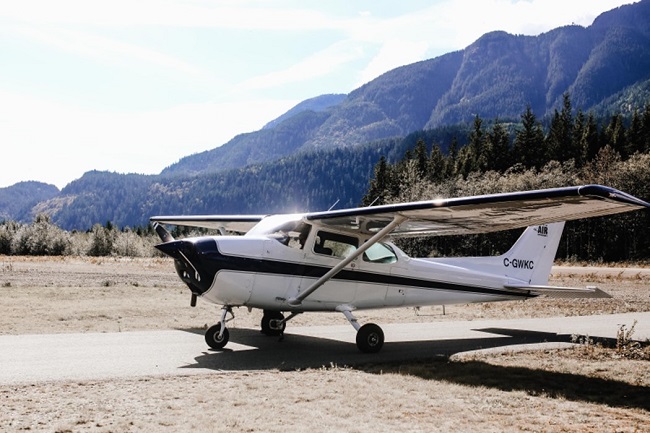
A lot of this also has to do with skill levels. A newly minted Private Pilot may not even know about “Special VFR,” or how to ask for it, and might not know much about MVFR either. Those things will come with experience, or from a good instructor. That Private Pilot IS legal to depart in those low VFR conditions, but again, is it safe for that pilot to do so? Why risk it if just staying on the ground for a little longer will allow the weather to improve. It if does not improve, fly another day.
Several times, when giving rides to friends in my plane, I will get a request sounding like this: “Can we buzz my house?” That term sets off an alarm in my head. I usually respond by saying that the term “Buzz” is an old-fashioned term that came from the Barnstormer Days of aviation before there were regulations that are designed to keep us safe. The term seems to stick around. Then I tell them that we don't buzz anything. If we can find your house from the air, and it is not in a densely populated area, we can circle the area at a safe altitude of no less than 1,000 feet, if we are not interfering with other traffic in the area.
Is it legal to go below 1,000 feet anywhere? Yes. Regulations say, “an altitude from which you can make a safe landing in event of an emergency without undue hazard to persons or property on the surface (91.119).” Here again, it may be legal, but is it safe? Even sporting events will have a TFR assigned to them restricting flights below 3,000 feet AGL during the event. Not long ago it was common for banner towing aircraft to fly over sporting events at about 500 to 1,000 feet. Certainly, any sightseeing flights should depend on the skill and experience of the pilot.

No discussion of “Legal or Safe” should go without mention of operations at non-towered airports. The Aeronautical Information Manual has a complete section for operations at towered, or non-towered airports. There are also “right of way” rules in the FAR's. Many pilots that have little experience at towered airports or did almost all of their training at non-towered airports, may make up their own rules depending on the training or operations at their airport. When some pilots are confronted with a situation, such as entering the pattern on an “extended base leg” and a suggestion that they should follow the traffic pattern will respond “it's not illegal.”
Another non-towered operation is the “Line up and wait.” Even the AIM says that “line up and wait” is a control tower operation issued by a tower operator and is not to be used at non-towered airports, but you will hear this at busy non-towered airports. Confront the pilot, and he will likely say that “It is not illegal.” But is it safe? If an accident occurs during one of these operations, and the FAA or NTSB investigates, and “line up and wait” was used, the pilot might find that the FAA views this differently.
When we get to Instrument Flight Rules, there are plenty of areas where the pilot may be Legal, but is it Safe? Too many to go into in a short article like this, and there are books written about Instrument Flying and how to remain safe. I hope those Instrument Rated pilots will read those books. You can never know too much. And remember the old saying: “A safe pilot is always learning.”
To assist you in being a safe pilot, your ARIZONA PILOTS ASSOCIATION presents safety seminars, for free, all over the State. Visit the Web Site for times and locations near you. And don't forget to “Bring Your Wingman.”