
By Paul Wiley
This article is intended for pilots flying under both Visual Flight Rules (VFR) and Instrument Flight Rules (IFR). It is intended to provide and to summarize some best practices for flying within Terminal Radar Approach Control (TRACON) airspace as recommended by air traffic controllers I have spoken with (from Phoenix and SoCal approach control facilities) over the course of my flying career. I have tried to structure the material in a sequence starting with pre-flight and ending with exiting from TRACON airspace.

File a proper flight plan: If you are filing an IFR flight plan, there are two things you shouldn't do, especially if you are departing from a congested area: File Departure Airport direct Destination Airport and file via GPS waypoints. In most ways, ATC is a dinosaur regarding technology. If you don't file a proper flight plan, it could result in a delay in your departure and could also result in potential hazards. Most airports will have a SID or Obstacle Departure Procedure. Find out the preferred method and file it even if you are departing VFR. Be familiar with it. Some SIDs spell out your route entirely and some demand that you stay on a departure heading until turned by ATC. Use airways and VORs connected to those departures to get through TRACON airspace. ARTCC “Centers” usually have more latitude to allow you to skip across these structures, but Approach airspace is more confined and congested. The departure procedures and preferred routes are there for your safety.
Radio Etiquette: Actively listen before you transmit. One of the biggest pet peeves mentioned by controllers is that pilots just listen for dead air but not what is being said. If the previous transmission was one that required an obvious response, allow some time for the response. Just like pilots, controllers can be busy during dead airtime. Keyboard inputs are being made, coordination accomplished, plans finalized, etc. It is very frustrating to ATC when a query is made, there is a moment of dead air, a squeal, and then someone injects "BLOCKED!" If the controller is making several transmissions, a request for flight following is not a high priority. If you're IFR and waiting to check in, I promise, if the controller is busy, they will reach out to you if you haven't had a good moment to check in.
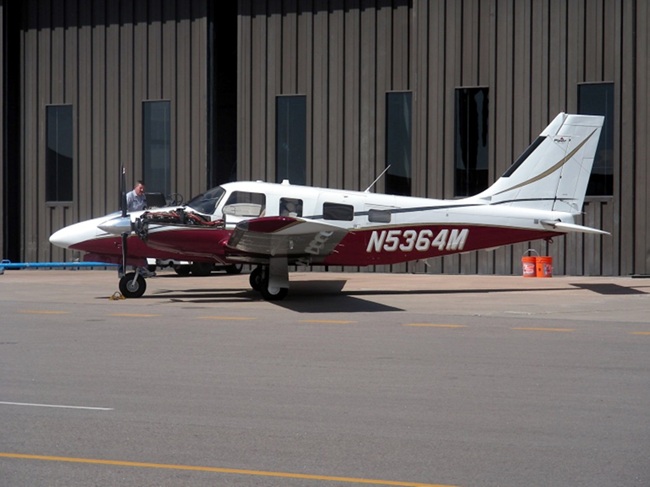
Use your call sign every transmission: Each time you check in on a new frequency, the controller is required to identify themselves once, because they are the only control facility that should be on that frequency until they tell you to change to another. There will usually be several pilots on a frequency and to ensure the right pilot got the right information, the pilot is required to identify themselves with EACH transmission. It may seem obvious in a conversation flow, but if something goes wrong, the audio playback becomes ambiguous on who took the instruction without it being tagged with proper aircraft identification. I've seen inadvertent transmissions become assumed acknowledgements for another aircraft. It may seem tedious, but there is a purpose and need behind this requirement.
The importance of requesting flight following: It may seem that sometimes certain controllers sound annoyed with flight following. Please believe they are in the minority. If you're skirting around BRAVO airspace, overflying airports, or in areas of known parachute activity, knowing who you are and what you want to do is immensely useful to the controller. Without flight following, we don't know what altitude you're going to climb to, the general direction you want to go, or your intentions as it relates to an inbound Boeing 737, for example.
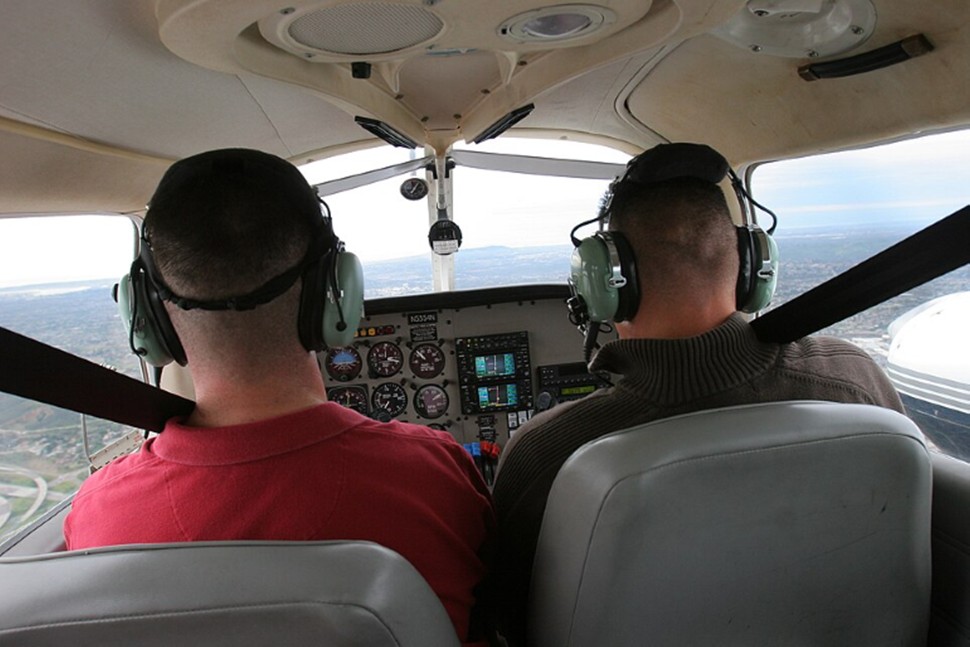
Flight Following Format: This overlaps with radio etiquette. We understand that talking to ATC can seem intimidating, but remember ATC is a service for you. That said, sometimes, they are really busy. Once you've determined a good time to make your request, be efficient, not hurried. Most controllers prefer an introductory request along the lines of: "SOCAL, N12345 REQUEST FLIGHT FOLLOWING." You can include your position on the initial check in. "SOCAL, N12345, TWO MILES SOUTHEAST VAN NUYS, REQUEST FLIGHT FOLLOWING." Once the controller notifies you that they are ready to receive your request, using a proper format sequence with as little extra phraseology at a steady but not rushed pace is most appreciated. Controllers prefer the aircraft identifier over the name of the aircraft, as some aircraft have different identifiers but similar names. Equipment suffixes are unnecessary for flight following. And please, in the name of all that is Holy, do not spell out an airport with a "KILO" before the three-letter identifier! We already assume you are filing for a destination in the United States. It is unnecessary and actually causes confusion. If the airport is in the local area of the TRACON, you can assume we don't need it spelled out unless it uses a Letter-Number combination. If it is an airport outside the local area, then stating the airport name followed by the three-letter identifier can be helpful. Remember to always state your call sign with each transmission. What is "extra phraseology"? Prepositions, pronouns and in some cases, conjunctions. Starting your transmission with "We are..." or "This is..." is unnecessary. The more you sound like a robot, the better. I'm sure if we met in person, we could have some great conversations and get to know you in time, but on the frequency, it should be: "SOCAL, NOVEMBER 12345 A CESSNA ONE EIGHTY-TWO, (position if not stated previously), LEAVING TWO THOUSAND THREE HUNDRED FOR EIGHT THOUSAND FIVE HUNDRED, REQUEST FLIGHT FOLLOWING TO DEER VALLEY AIRPORT, DELTA VICTOR TANGO. This information gives the controller the WHO, WHERE, WHAT and HOW to complete your request.
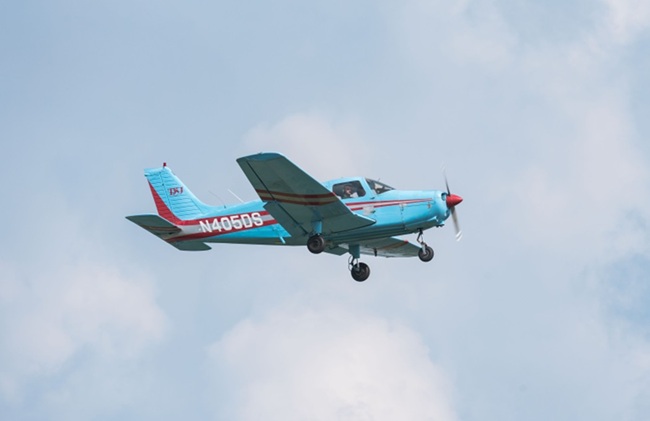
Importance of Hearback/Readback: This is another "active listening" skill. It is in your best interest as a pilot if you don't answer ATC transmissions with "N12345, ROGER." You just let the controller off the hook for ensuring you copied everything correctly. Reading back your instructions reinforces the instruction in your mind and requires the controller to ensure you heard the instructions correctly. Don't truncate an instruction to fly heading 230 and descend to 5000 with: "HEADING TWO THREE ZERO AND DOWN TO FIVE, NOVEMBER 12345". I get we do it all the time, both controllers and pilots. Errors usually happen because of shortcuts taken with phraseology, practice reading back instructions with your call sign. "TURNING RIGHT HEADING TWO THREE ZERO, DESCEND AND MAINTAIN FIVE THOUSAND, NOVEMBER 12345".
Understanding IFR and VFR Separation Standards: In the TRACON environment, standard separation between IFR aircraft is 3 miles laterally (5 miles in Center airspace) and a thousand feet vertically. VFR to IFR aircraft is 500ft and what is known as "green between," an old radar term, that basically means "physically separated" in a lateral sense. Of course, there are a multitude of additions and variations for degrees divergence, visual separation, CLASS BRAVO, etc. What I want to focus on here, though, is the proliferation of TCAS-RA in the TRACON environment. If you are in this area, it is highly likely that you may come close to large commercial and jet aircraft either climbing or descending. Almost all of these large jet aircraft have TCAS (Traffic Alert and Collision Avoidance System) equipment on them. The sensitivity of TCAS equipment often extends past the normal IFR to VFR separation standards of 500ft for ATC which will result in a RA (Resolution Advisory) for the commercial or jet aircraft. Most controllers will actually stop IFR traffic from VFR traffic by 1000ft in order to avoid the RA. Sometimes, the 500ft cannot be increased due to other traffic or terrain. The controller should be calling traffic to each of you. Call this traffic in sight as soon as practical and ensure your altitude is at a proper VFR cruising altitude or as assigned by ATC. If you are encountering turbulence that might push your aircraft towards the other, let ATC know. If you are not getting flight following, try to give those aircraft a wide berth. Aircraft on final are in a very sensitive phase of flight. A TCAS-RA may cause the arriving aircraft to abort the whole approach if given a climb advisory. If you are operating in an area near airport final approaches, use extra care to try and avoid the extended centerlines for the runway paths of said airports.
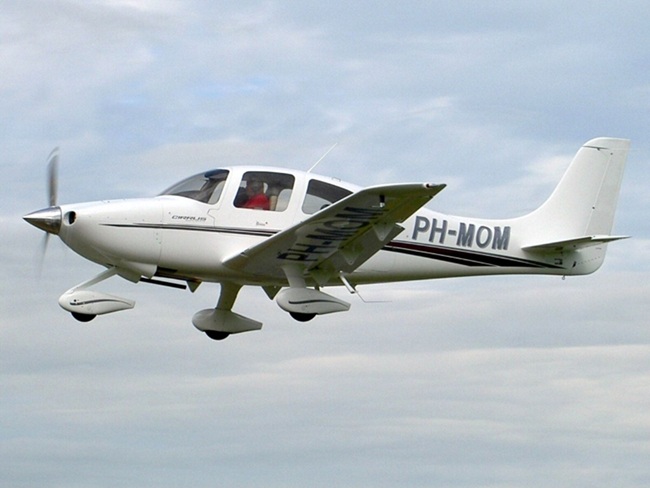
Don't assume the controller is aware: In ATC, we do our best to ensure everything is properly accounted for, but just like you, we are human. Do not be lulled into a false sense of security that just because the controller isn't talking to you, your aircraft is 100% safe. Controllers operate in a duty priority. IFR aircraft have a higher duty priority than VFR aircraft. The controller may be busy doing one thing when a primary target that just popped up on radar is now in your vicinity and the controller's scan hasn't come back around to your aircraft yet! Be vigilant! Flight following is a great tool for both you and the controller, but it is not a fail-safe, and you are the one up in the air! Keeping an active scan is as important for the pilot as the controller. If something doesn't look right to you, ensure your safety and ask the controller for confirmation. If traffic is called and you notice two targets, get verification if you need it and/or report the additional aircraft you see. The National Airspace System works best when there is a good working partnership between controllers and pilots. We both have to remember we are doing our best to ensure the safety of everyone participating.
Conclusion: In light of the recent tragic and fatal mid-air collision in Washington DC many of these comments are particularly timely and relevant. While the comments in this article are provided by real air traffic controllers, I take full and sole responsibility for their accuracy.