
By Howard Deevers
After reading quite a few accident reports, I noticed that there were many that happened during a “go around.” I know that you remember your basic training about go arounds, and you will have to demonstrate one on a checkride. So, why do we have so many accidents during a go-around that is a maneuver that should prevent accidents?
Reading the accident reports, I find that the NTSB will interview the pilot, if able. The NTSB will check everything: the weather, the log book for the plane, the voice tapes, if it was at a towered airport, the pilot history, and much more. Many of the accident reports show that the pilot simply did not follow the proper procedure recommended in the Pilot Operating Handbook (POH) for that airplane. The POH will have a check list for a go-around, also called a “rejected landing.”
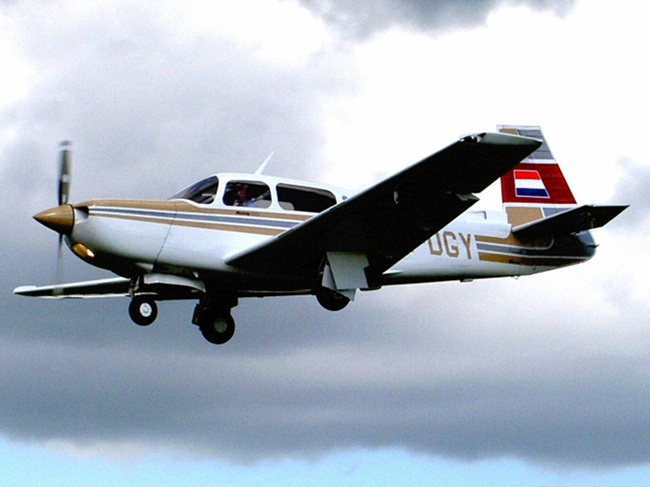
When you make the decision to do a go-around, this is not the time to reach for your POH, or a Check List. You are close to the ground, possibly in a crosswind or other weather conditions that you must also deal with, and you are slow and configured for landing. There is a lot going on with you and your airplane. That decision to go around has to be made quickly, and your physical response to all of those factors that caused that decision must happen very fast.
Many pilots fly only one type of airplane that they own or rent often. Instructors fly various airplanes, and maybe more than one type in the same day. When I was instructing at the flying club in Pittsburgh, we had Cessnas, Pipers, Mooneys, Grumman, and a few other planes that would be on lease back. I had a POH for each model that I would fly and read the safety and emergency sections for every one. The Cessna 172 and 152 do differ slightly, just as the Piper Cherokee 140, Archer, and Dakota differ slightly. There are differences that you should be aware of, such as: a fuel injected engine does not have carburetor heat, and higher performance airplanes have a prop control to deal with, too. The basic quick response items were pretty much the same for all airplanes, but knowing that you needed to push in the carb heat on a go around on Cessnas was an important item.
After making that decision to go around you want all of the power you can get for climb out, and forgetting carb heat can rob you of some of that needed power at a critical time. If you are at a Control Towered airport, do you have to tell the Tower that you are going around? My answer to that question is, if you have time. You must execute the go around immediately and you have a lot of important things going on right now. The Tower will figure out that you are going around probably before you have time to tell them. After you have started the climb and are configured correctly, and have the time, go ahead and tell the Tower that you are going around. They probably already know that, but talking on the radio is not the first thing on the checklist for a go around.
On a Flight Review, required every 2 years, I ask the pilot to do several landings and at least one go-around. In most cases I find that they have not done a go-around since their check ride or last flight review. It seems that it is not an item that we practice very frequently. After reading these accident reports, I am thinking that maybe this is something that we should practice a bit more often. Instrument pilots practice approaches, and do “missed approach” procedures, but they already know that they are going to do that, and are 200 feet above the runway when they start the missed approach. Quite a difference from 3 feet above the runway and making a quick decision due to things not going as planned. Let’s do our best to keep ourselves and everyone around us safe, and practice a go-around a bit more often.
If you want more safety information, attend a Safety Seminar sponsored by your ARIZONA PILOTS ASSOCIATION, and the FAASTeam at a location near you. They are free. Check the website for a location and time, and “Don't forget to bring your wingman.”