

By Howard Deevers
It seems that we talk a lot about density altitude in Arizona, and we should. It is important to remember a few things about density altitude for your own safety. Anyone that flies in Arizona has been exposed to the effects of density altitude. You can't see it, feel it, or hear it, but you have to know that it exists.
Every AWOS at non towered airports will report density altitude as part of the weather at that airport. It was really fun flying out of an airport in a colder climate and hearing the AWOS give density altitude expressed in negative numbers! How am I expected to adjust for that? At towered airports they have an ATIS that may not give you a number for density altitude but will say “check density altitude.” A short cut for that is to ask the Ground controller what they show for density altitude while you taxi to the assigned runway. They have it. Don't forget to check your POH for information on your airplane.
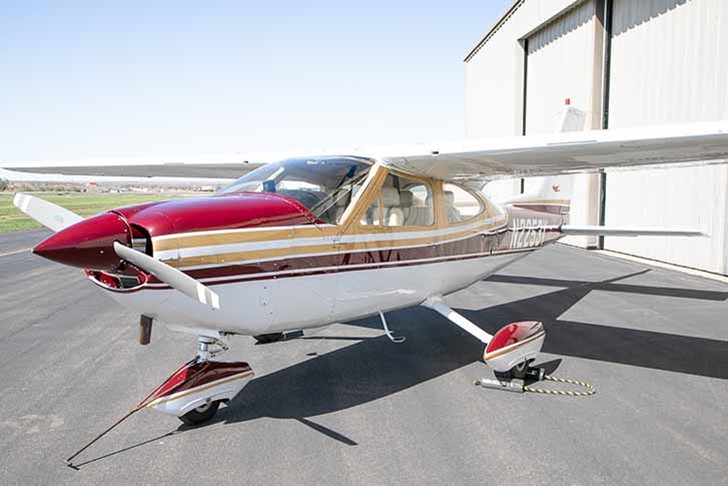
Here are a few things to remember about density altitude: First of all, your take off roll will be longer than usual. Add about 10% distance for each 1000 feet of density altitude. If your airport is 2000 feet MSL and your density altitude is 4000 on a hot Arizona day, you should plan a takeoff roll as if you were at an airport that is 4000 feet MSL. We have airports in Arizona that look down on Denver, such as Flagstaff that is 7000 feet MSL. It is not unusual for the density altitude at that airport to be 9000 feet or more in the summer.
I hear some pilots telling me that they don't have to worry about density altitude because they have a turbocharged airplane. When I hear that I think these pilots have a complete misunderstanding about turbocharging and density altitude. An engine will not develop full horsepower from a normally aspirated engine, and turbocharging may give you the HP up to a critical altitude, but density altitude will still have an effect on the wings and prop of your airplane.
Another little known fact is that your true air speed will increase by about 2% for each 1000 feet of density altitude. Remember that “True Airspeed” is not your indicated airspeed. Get out your E6B and calculate the true airspeed. Alternatively, you can do it on your iPad using ForeFlight. Except for hours long cross-country flights, I don't find much value in the effort it takes to calculate TAS, and rely on my flight planning for time, distance, and speeds. The winds will change anyways. Just remember that your true air speed will be a bit higher on your landing and be ready for that.
Your take off distance and landing speed are the most important things to pay attention to, so don't just “brush off” your need to know about density altitude.
Have a good summer in Arizona.