

By Howard Deevers
We have talked about Density Altitude many times. Now let us talk about the airplane and the people in it. Anyone that lives or visits Southern Arizona, New Mexico, Texas, and other states affected by the excessive heat of summer, know that the heat can be very uncomfortable for us, and for our airplanes.
Let’s not forget about the effects of excessive heat on our airplanes. We are flying behind “air cooled” engines, and when we start out at temperatures over three digits, we are already having trouble keeping our engines cool. The good thing about the flying is that we can climb higher. Just don't overheat the engine while doing that. Remember “the Standard Lapse Rate?” the Standard Lapse Rate is 2 degrees C per 1000 feet, as used in aviation. You may find other formulas for different science projects. For those of us that still think in “F” temperatures, 2 degrees C is about 3.5 degrees F. If you depart from an airport that is 2000 feet MSL, and the temperature is 100 degrees F, you can cool off very well after climbing to 10,000 feet MSL. Both you and your airplane will enjoy that cooler temperature.
 Take water along with you! I have attended, and presented, enough safety programs on survival after an off-airport landing in desert, or other hostile areas. We have ADS-B on most of our airplanes now, so locating a downed airplane may be quicker than it was years ago, but don't depend on that. As a Sargent in the Air Force put it: “Failure to prepare is preparing to fail.” The message is to be prepared for any event. I carry a “survival kit” in my luggage area in my plane. There are many pre-made kits available on the market if you want to buy one, or you can make your own by visiting any sporting goods store and getting the things you might need. In addition to my kit, I also carry water in a crash proof container.
You may never need such a kit or water just flying around in Southern Arizona, but if you are going on a long cross-country trip over areas, you have not traveled before, such a kit might save your life if you do need to make that off airport landing.
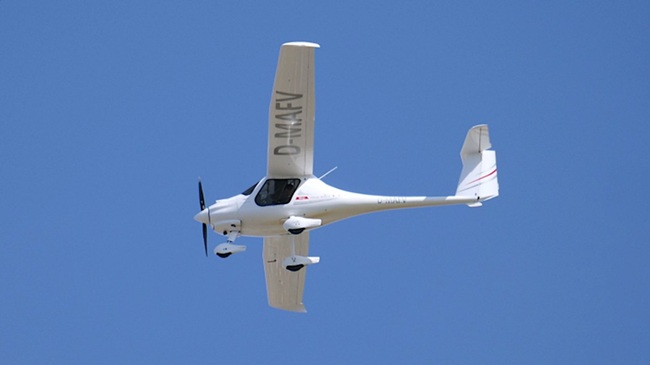
In addition to your personal things, you should also look at the health of your airplane on these hot summer days. Talk to your mechanic about oil temperatures, engine heat, and best practices for keeping your engine comfortable at 105 degrees F on the ground of your departure airport. Change oil more often and use your mechanics advice on best oil for hot days. Also check your POH for more information on caring for your engine in hot weather.
Arizona is still a great place to fly any time of the year. With proper care and preparation there is no reason not to fly in hot weather. Just be that pilot that is ready for anything.