
 BACK TO BASICS
ABORT BRIEFS AND LOSS OF CONTROL CONSIDERATIONS
By David Dunteman
Arizona Pilots Association and Recreational Aviation Foundation
Issue 2, February 3, 2016
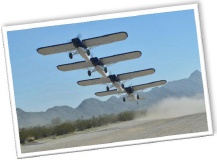
Why do an Abort Brief?
Immediately prior to takeoff, pilots can improve the chance of a successful emergency procedure by reviewing the actions that they will take in the event of an engine failure on takeoff. If the engine fails, the pilot does not have to think about what action to take—they simple execute what was discussed in the brief. This provides additional benefits when flying with another pilot—both pilots know exactly what is going to be done if the engine failure occurs and can speak up or intervene if during the excitement of the event the pilot flying is tempted to stray from the brief.
In my brief I discuss three potential scenarios. First, if the engine fails during takeoff with sufficient runway to land straight ahead on the runway, next the procedure if too low to turn back to the airport, and last the altitude and direction of turn based on winds for a turn back to land opposite direction. This altitude varies based on weight, runway slope, wind, and density altitude. Practice in your own aircraft with a qualified instructor.
Review from January Event at Ak-Chin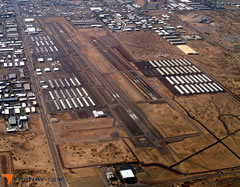
Outstanding participation! We had 44 pilots and 30 aircraft attend. We looked at lots of numbers and they showed us this: We are all used to flying out of our home field and have no trouble there, but when we go somewhere else and add altitude, a passenger, more fuel, a rough surface or an uphill slope, and maybe a tailwind, we can easily increase our takeoff distance FOUR TIMES. Then ... Ground Rush and Longer Takeoff Roll easily combine to make us want to rotate early with potentially disastrous results. So stay on the safe side: Fly early when it's calm and cool. Stay light. Know your numbers and use the "71% speed at runway midpoint" rule.
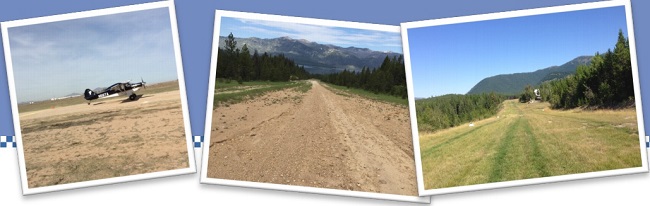
How do you prepare for Departure?
Immediately after my before takeoff checklist I brief myself, other pilot, and or passenger about what we will do in the event of engine failure during takeoff.
When flying a large commercial aircraft this is my abort brief. It is accomplished with each new first officer of a pairing and updated for each takeoff with any special changes based on runway length, surface conditions, specials procedures for an engine out turn, and intended divert field in case return to the departure airport is unfeasible.
I have a go mentality on aborts— Assume we will continue the takeoff. That said, we cannot continue the takeoff when below 80 knots and a warning horn or bell sounds—in the event of a warning horn or bell below 80 knots company procedures dictate we must abort—expect “Reject” or “Reject, I have the aircraft” if you are the pilot flying.
If we have a master caution below 80 knots and I assess we could not continue to our destination with the condition—for example a cargo door light that may affect pressurization – expect me to call for a reject. Otherwise, expect to continue.
Above 80 knots we will only Reject for Fire, Fire Warning, Engine Failure, Predictive Wind Shear, or the aircraft is unsafe or unable to fly.
I will address the flight attendants and passengers of our intentions and 2 you advise tower and have them roll the safety equipment. Any questions?
In a single engine GA aircraft this is my abort brief.
(1) In the event of an engine failure on takeoff, if I can land on the remaining runway I will do so by pulling the throttle to idle and stop straight ahead. If I am going to depart the prepared surface I will secure the engine by pulling the mixture to idle/cutoff, rotate the fuel selector to off and turn off the master switch after a radio call to tower roll the fire trucks. If I need to stop short of a fence I, ditch or building I can intentionally ground loop by stepping on one brake.
(2) For an engine failure after takeoff where I can not get land in the remaining runway and I’m below 600’ AGL—2100’ MSL at my home field—I will make a turn not to exceed 45 degrees and divert my flight path left or right to find the most hospitable terrain for an off field landing. My first priority is to fly the aircraft to touchdown even into trees if that is all that is there. I will maintain flying airspeed and if flying into trees aim to break off the wings in-between the largest trunks to dissipate energy.
(3) If I lose the engine above 600’ AGL I will make a turn into the wind—today a left turn to land opposite direction on Runway 7R or the parallel taxiway A. When able I 3 will declare and emergency and make my landing location known.
(4) If departing a backcountry strip I will discuss my climb out and egress plan.
If you do this brief regularly, it will become second nature and in the event you have an engine failure on takeoff valuable time will be saved as you automatically go through this procedures rather than having to assess the situation and decide what to do. By doing the brief, you are reviewing the actions you are going to take in the event of a problem. You are making your choices while on the ground and simply executing them in the air. These are very valuable exercise to practice with a competent CFI who has trained to handle these emergencies.
With proper training, consistent briefings, and in flight practice with an instructor, it is possible to reduce loss of control situations that plague the engine failure after take off scenario that has given rise to the term “the impossible turn.” Lets go out and train at altitude to learn the turn back altitude for your aircraft!