

By Fred Gibbs
Just to be clear, the opinions and statements made within my articles are strictly mine and may not necessarily reflect any policy or position of the Arizona Pilots Association.
Fred’s Perspective: When is it time to walk away from flying?
There comes a time, a point in life, that every pilot, including yours truly, has to make and accept that life changing decision that it is time to hang it up! I know some of you may find it hard to believe this, but in 2023 I turn 80 years young! But it is true!! My mind is still as sharp as ever tho’, my vision is 20/20, blood pressure is right where it should be, and up at 12,500 feet my oxygen saturation level is still at 95%! And I am still flight instructing almost every day, and average over 500 hours a year instructing. And yes, at 79 years old, I do have the usual aches and pains you would expect, but I soldier on!
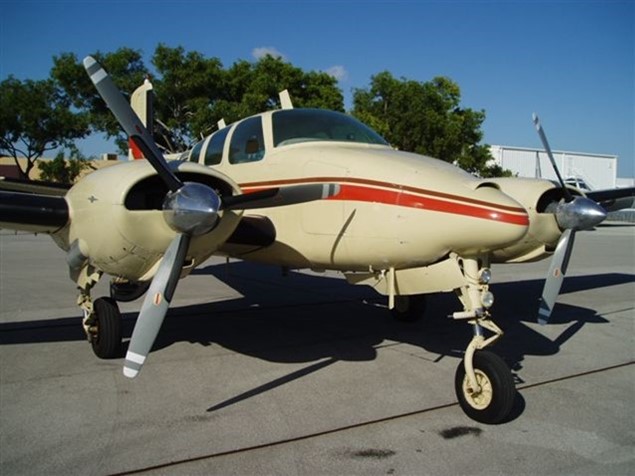
2023 will be my 51st year in the aviation business, 30 years in the FAA air traffic world, and 20 years as a consultant on many aviation adventures; and I’ve done flight instructing almost all of that time. It will also be my 50th year flying, 46th year flight instructing, 39th year of aircraft ownership, with 35 of those years flying my trusty ol’ stead, my Super Viking, aka “The Speed Monster.” Together, we have traveled sea to shining sea, border to border, flying in 46 of the 50 states. Hawaii, Alaska, North Dakota, and Oregon missed out!! Of course, I have been to those states, but just not with the Monster.
Anyway, that time is staring me in the face, and I reckon I will need to pull up my big boy pants and make a decision (by mid-2023) about retiring for the third time in my life. A primary factor in my decision-making is that airplane insurance is becoming a real hassle. No one really wants to insure an 80-year-old pilot in their complex, high-performance aircraft, regardless of ratings, currency, or proficiency. So, facing reality, selling my trusty ol’ steed is in my future – sometime! It will be like cutting off my arm! But life is full of those kinds of decisions. It could be worse. It could be a medical issue that drives me out of flying. Fortunately, I continue to pass my 3rd class flight physical every year with flying colors, no pun intended. But every pilot knows the loss of your medical remains one of those dreaded things that lives in the back of every pilot’s mind.
However, as long as I can pass the 3rd class flight physical, I can continue to instruct, and I really love instructing – most of the time. But I consider myself as an old dinosaur, a holdover from the old days of aviation. A stick and rudder guy. I can fly an airplane without an iPad, without Foreflight, without a cell phone, and even without a GPS!! I can do math calculations in my head, calculate time and distance, fuel burns, heading intercepts, holding pattern entries, etc., in my head. I can read, interpret, understand, and teach weather. I can actually read and understand the nuances of sectional charts, low altitude IFR charts, approach plates, NOTAMs, TFRs, and all kinds of airspace. 30 years in the air traffic control management world, 20 years consulting on those issues, and 50 years of using that knowledge practically makes me a walking ATC encyclopedia!
And yet it may be time to walk away, while I still can, on my own terms…
into the sunset years of my life. I hate getting old!
Discussion point:
VFR receiving Flight Following

Scenario: OK, there you were, VFR at 9500 feet receiving Flight Following services. The approach controller told you to maintain at or above 9500 feet. Not a problem. But that was fine until you needed to start descending for your destination. The radio was full of chatter; the approach controller was quite busy, and you couldn’t get a word in edgewise. You are closing in fast on your destination, so you started down. After another minute or two or three, you finally got hold of approach control, and was immediately chastised by the controller for leaving an assigned altitude. But I was VFR, so altitude should have been my choice, right?”
Well, I’m sure you are not the only one who’s found themselves in this dilemma. Pilots are certainly encouraged to use Flight Following services when available. However, sometimes you find yourself stuck with an ATC restriction or instruction, i.e., maintain at or above 9500 feet, that they, or you, can’t remove because of frequency congestion. So, some clarification is needed here. When you asked for Flight Following, ATC gave you a transponder code and asked you “What is your current altitude and what will be your final altitude?” Being VFR, you picked 9500 and ATC says (infers) “Thank you”. The controller DID NOT assign you an altitude nor did (s)he instruct you to stay at a certain altitude, therefore the altitude is at your discretion. However, in the scenario as described above, ATC DID issue you an altitude restriction, and if you leave that assigned altitude without clearance from the controller, you have failed to comply with an ATC instruction or clearance.
Therefore, if you did start down, I have some bad news for you: You probably did bust a regulation. The relevant paragraph is 14 CFR 91.123 Compliance with ATC clearances and instructions which says:
(b) Except in an emergency, no person may operate an aircraft contrary to an ATC instruction in an area in which air traffic control is exercised.
The FAA Chief Legal Counsel has issued several opinions on this subject. The most pertinent is the Karas 2013 opinion, which is stated in part, below:
Pilots flying in controlled airspace must comply with all ATC instructions, regardless of whether the pilot is flying VFR or IFR, in accordance with FAR 91.123(b). ATC instructions include headings, turns, altitude instructions and general directions … A pilot flying VFR in Class E airspace, which is controlled airspace, is not required to communicate with ATC; however, if a pilot is communicating with ATC and ATC issues an instruction, the pilot must comply with that instruction.
The FAA Legal opinion is pretty clear. These are the folks that will rule on a pilot deviation. If you want to keep your license, you must comply with ATC instructions, even while VFR and in Class E airspace. You CANNOT just leave that altitude; you CANNOT just squawk 1200 (intimating you are cancelling Flight Following) and descend; you CANNOT just squawk 7700 and start down; and in this scenario, it will not be easier to ask (the FAA) for forgiveness instead of permission. Once ATC assigns or limits you an altitude while receiving Flight Following, you need to start thinking and planning ahead. Don’t wait until the last minute to ask to start down, because Murphy’s Law might just rise up and bite you!!
In summary, if you find yourself caught up in such a situation, I most definitely recommend you file a NASA ASRS Report immediately after landing.

SAFETY PROGRAMS
There are NOT a lot of FAASTeam safety programs on the schedule over the next couple of months around the state, but that’s changing. Safety programs were held in Sedona in July, in Payson in August, and in Yuma on September 24th. I am projecting a winter operations program in Flagstaff for late October or mid-November, date to be determined and for the Yuma pilot group in January 2023 . Simply log on to the Internet and go to WWW.FAASAFETY.GOV, click on “Seminars” and start checking for any other upcoming seminars. Masks are optional but are recommended.
Should you desire a particular safety or educational program at your local airport or pilot meeting in the future, such as the BasicMed program, our “Winter Wonderland” snow season special, or my newest one on LIFR approaches, which discusses the hows, whys, and pitfalls of shooting an approach all the way down to minimums and missed approaches, simply contact me at This email address is being protected from spambots. You need JavaScript enabled to view it., or call me at 410-206-3753. Arizona Pilots Association provides the safety programs at no charge. We can also help you organize a program of your choice, and we can recommend programs that your pilot community might really like.
There are also a lot of great webinars online, each about an hour long, and worth credits towards your WINGS participation. You might find one that is right up your alley or really “tickles yer fancy”!!