

By Fred Gibbs
Just to be clear, the opinions and statements made within my articles are strictly mine and may not necessarily reflect any policy or position of the Arizona Pilots Association.
Fred’s Perspective: How Could This Happen
No doubt every pilot across the United States is talking about the terrible mid-air at the Dallas Air Show between the Commemorative Air Force’s B17 flying fortress and the Bell P-63 Air Cobra. What a tragedy. Both aircraft were being flown by highly skilled pilots, and it appears the pilot of the Air cobra made a mistake. We usually survive our mistakes and add them to our “Box of Experiences” and learn from them. None of us are immune to mistakes, and most are usually not “biggies”, and we survive them.  This one was not! There are, and will be, lots of videos of the accident. The spectators at the air show have lots of cell phone videos of the accident, and the NTSB is requesting as much of it as possible to help determine the cause of the mid-air. Sure, it is obvious the P-63 hit the B-17, but the real issue is “HOW COULD THIS HAPPEN?” The pilot of the P-63 knew the B-17 was there.
 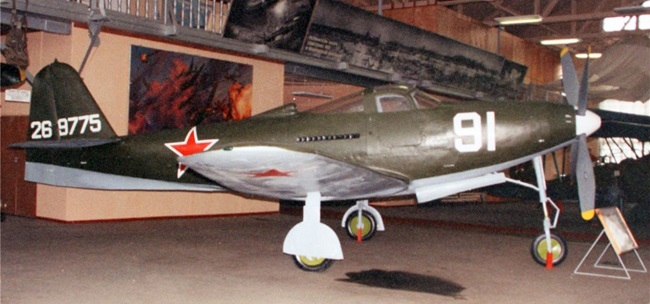 He was flying formation with it as part of the airshow. The two P-51’s, on their respective show lines, in front of the B-17 broke left. The B-17 following them, on his show line, appears to have started a left turn, and the P-63 trailing the B-17, apparently NOT on his show line - I think – started its left turn, and possibly lost sight of the B-17 under his right wing – Purely my opinion! Even with all our new automation, practice and strict procedures, Fate still remains the hunter: Just 20-30 feet altitude difference up or down of the P-63 would have only created a (very) NEAR-mid-air and everyone would still be alive today, albeit pretty well shaken up! six fatalities and the destruction of two WW-II classic airplanes ruined the day. It is way too early to speculate on the cause of the accident, so no snap judgements, please. The NTSB estimates it will have a final report on the accident in 12 to 18 months.
Discussion point:
Well, winter has certainly arrived here in Flagstaff. Second bout of snow, but fortunately not much accumulation – yet! A safety seminar is planned here at Flagstaff on Saturday, December 10th specifically addressing winter flying, effects, operation of your aircraft and airport operations in the winter environment. The notice will be going out on the FAASafety.GOV website for anyone to register.
If you fly into Flagstaff during the winter, please remember: just because Flagstaff is in Arizona, all of Arizona is NOT hot desert! Flag airport elevation is 7014 feet MSL, pattern elevation is 8000 feet MSL, temperatures are considerably lower than Phoenix (it is only 14 degrees Fahrenheit as I write this!), and our runway, although very well plowed and maintained, may still have a thin coating of snow, ice and/or black ice. Be very, very careful using brakes. Be sure to check NOTAMs for field condition reports (FICON) and TALPA values. Oh, just in case that term “TALPA” brings up the question “What the heck is TALPA?”, it is in reference to braking action conditions on the runway. (PS – we cover that in our safety program!).
Runway Incursion:
Every year as part of the FAASTeam representative’s training, we cover the runway incursion statistics on all of the towered airports here in Arizona. For as long as I can remember, Flagstaff never made the list, never had a runway incursion –
UNTIL THIS PAST YEAR! We finally had one. No, we are not bragging, and certainly not pleased we finally made the list! But I must say, it was just a little runway incursion, if there is such a thing. Here is what happened –
An itinerant pilot in his Bonanza had been given take off clearance for runway 21 and was advised about the traffic, a CRJ700 commuter airline flight, on a 4-mile final for runway 21. The pilot acknowledged his takeoff clearance but NOT the traffic. The tower controller re-transmitted the traffic information. The pilot acknowledged the traffic and abruptly cancelled his take off clearance and stopped moving. Tower then cancelled his take off clearance and told him to hold short of runway 21 (at Alpha 1). The pilot advised holding short of 21. The tower controller then advised the CRJ700, then only about 2-3 miles out on final, that the Bonanza was holding short of 21, which they acknowledged.
The CRJ700 then (surprisingly) initiated a go-around just outside of a half-mile from the threshold (of the displaced threshold). The tower controller assumed the pilot initiated the go around due to winds and when asked to verify (they were) going around, the CRJ700 pilot stated they were a little too high, and shortly thereafter the (apparent) co-pilot stated there appeared to be an aircraft on the runway. Tower advised the CRJ crew that the aircraft was holding short (of runway 21). The CRJ crew member stated that the aircraft looked to be across the hold line. When the tower finally departed the Bonanza, he told the pilot that he needed to tell the tower (controller) if he was past the hold line. The pilot told the tower (controller) he was (only) about 10-feet passed the hold short line. The Alpha 1 hold-short line, and actual physical position, is almost one mile from the tower cab and the Bonanza appeared to the tower controller to be holding short of the hold line. The CRJ landed without incident after the Bonanza departed.
It is interesting to note that the Alpha 1 taxiway enters the displaced threshold 1,800 feet from the end (threshold) of the actual landing portion of the runway and 2,800 feet from the 1000-foot distance marker, the big solid white boxes, the point where most large aircraft touch down. The PAPI glide path brings you across the displaced threshold (and the point where Alpha I taxiway enters the displaced threshold) at roughly 200 feet above airport elevation.
So, YES, a runway incursion did occur. Was it catastrophic? I don’t think so, but it did occur. Could the CRJ have landed safely? MOST LIKELY, but a go-around was certainly justified and the safe thing to do. The pilot of the Bonanza also tried to avert what he considered an unsafe operation, i.e., pulling out in front of a fast- arriving aircraft. Unfortunately, he was already across the hold line, and should have told the tower immediately. By that time, it was already a runway incursion. The tower would then have instructed the CRJ to go around as soon as the pilot declared across the hold line. This runway incursion was classified as a category C runway incursion.

QUIZ of the MONTH:
- Ok, you just departed out of the Phoenix area heading up to Flagstaff at 9500 feet indicated on a nice VFR day. Your magnetic course in the GPS says to fly a course of 001 degrees but you keep having to adjust your heading to 356 to stay on course because of that pesky westerly wind. Hmmm, what altitude(s) should you fly?
- Even thousands plus 500
- Odd thousands plus 500
- Any altitude I want since I am VFR
- My assigned altitude by ATC
- Uh oh!!! Do I have a problem here? MY DME says I am 12 miles from the Shangra-La VOR, but my GPS says I am only 11 miles from the VOR?
- My DME is wrong.
- My GPS is wrong.
- Only my GPS is correct, because it is more accurate than my DME.
- Both are correct.
- Notification to the NTSB is required when there has been substantial damage which
- Adversely affects my aircraft’s performance
- Which causes small puncture holes in the skin of my aircraft
- Results in more that $25,000.00 repair costs to my airplane
- Both a. and c.
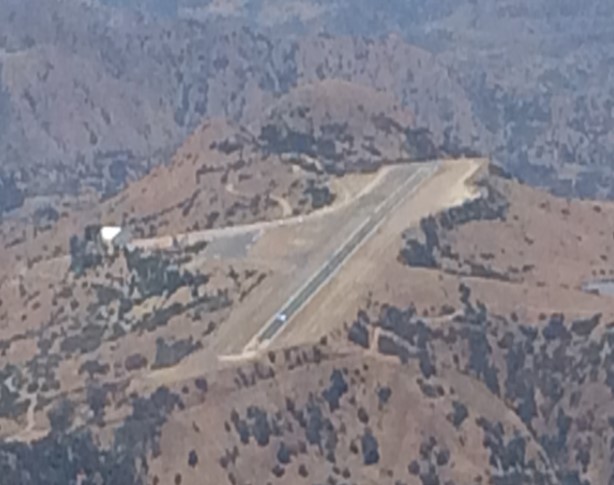 The illusion associated with landing on a narrower than usual runway may result in the pilot flying a
- Lower approach, with a risk of striking objects along the approach path or landing short.
- Slower approach with the risk of reducing airspeed below Vso or landing hard.
- Higher approach, risk of leveling out high and landing hard or overshooting the runway.
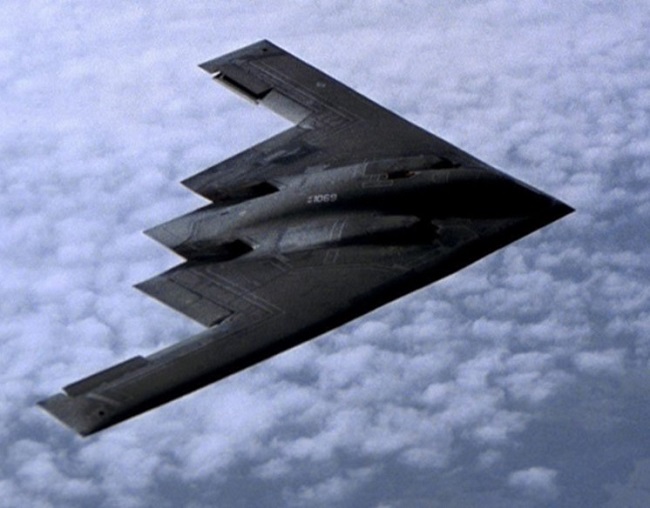 OK smarty pants! How does the B-2 bomber turn if it has no rudder. We know it does (we have actually seen it turn), so does it still have adverse yaw? How can it keep the wings level when landing yet still hold centerline with no rudder?
- Outstanding airmanship
- Pure luck
- Sticky tires
- Awesome brakes
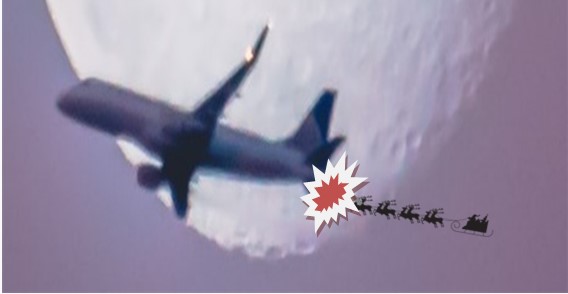 Santa is coming, flying a very long cross country and apparently extremely very fast, very high, but yet, with many stops. And, again, apparently with special flight clearance from NORAD, FAA ATC and support from the Air Force. Does he need to apply for exemption from 91.209 regarding Rudolph’s (anti-collision) lighted nose as his only lights?
(Answers at the bottom of the Safety Program section.)
SAFETY PROGRAMS
There are NOT a lot of FAASTeam safety programs on the schedule over the next couple of months around the state, but that’s changing. Safety programs were held in Sedona in July, in Payson in August, and in Yuma on September 24th. I am projecting a winter operations program in Flagstaff for late November or December, the date to be determined and for the Yuma pilot group in January 2023 . Simply log on to the Internet and go to WWW.FAASAFETY.GOV, click on “Seminars” and start checking for any other upcoming seminars. Masks are optional but are recommended.
Should you desire a particular safety or educational program at your local airport or pilot meeting in the future, such as the BasicMed program, our “Winter Wonderland” snow season special, or my newest one on LIFR approaches, which discusses the hows, whys, and pitfalls of shooting an approach all the way down to minimums and missed approaches, simply contact me at This email address is being protected from spambots. You need JavaScript enabled to view it., or call me at 410-206-3753. Arizona Pilots Association provides the safety programs at no charge. We can also help you organize a program of your choice, and we can recommend programs that your pilot community might really like. There are also a lot of great webinars online, each about an hour long, and worth credits towards your WINGS participation. You might find one that is right up your alley or really “tickles yer fancy”!!
answers:
#1 – b, VFR altitudes are determined by your magnetic course, NOT your heading. However, if below 3000 feet AGL, any altitude is legal.
#2 – d, both are correct. GPS draws a straight line to the exact latitude/longitude position of the VOR and to a vertical line directly straight up over the VOR. DME however is slant range, the hypotenuse of a triangle. Example is when you fly over the VOR 6000ft above it, your DME registers you 1 NM from the VOR (transmitter), GPS says 0 NM, you are directly over it.
#3 – a. The catch here is that the damage value, i.e., $25,000.00 is only reportable if done to property other than the aircraft.
#4 – a. FYI, Wider runways create the illusion of being lower; it seems like you are closer than you really are. This can be a real danger at night, so stay on the VASI!
#5 - 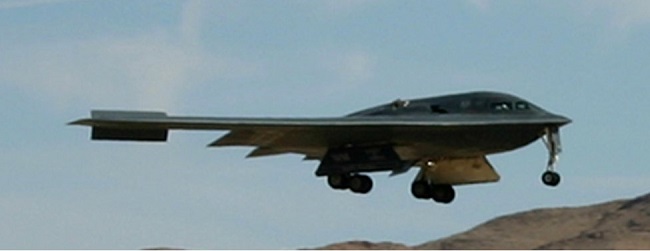 Because the B-2 does not have vertical tail feathers to control yaw at slow speeds, the re-enforced main gear doors act like big vertical stabs and it sure is weird to see the gear fully retracted and all three gear door in their full open position. (see photo)
At speed and altitude, the B-2 controls yaw via its split ailerons at the trailing edge of the outer wing. During non-hostile flying, the spilt ailerons are usually opened to 5°, below 5°s and the split ailerons have no effect. During combat operations, the B-2 crew manages yaw using differential thrust setting on the engines. According to the pilots, hooking up to a tanker can be a real challenge. You need to control your yaw with the control stick; you have to counter the turn to starboard with an equal turn to port.
#6. – you weren’t really expecting an answer here, were you??