

By Fred Gibbs
Just to be clear, the opinions and statements made within my articles are strictly mine and may not necessarily reflect any policy or position of the Arizona Pilots Association.
A short discussion on wind regarding operating up here in Flagstaff.
This year there have been numerous high wind events — several Haboobs in Arizona, a Derecho in the Midwest, and, good grief, the wind-driven fires in California, Oregon, and Colorado… and then there were the terrible fires in Canada and the associated wind-driven smoke events along the East coast. There were also unusual windstorms that caused major dust storms, flipped airplanes, and uprooted trees in Washington, Idaho and Utah.
Crazy and weird wind events happen, but extreme wind events induced by the added energy from a warming atmosphere are beginning to seem like the new normal. Whether or not you agree with that view, that is, climate change driven events, you would probably agree that windstorms demand their own risk management considerations. Sure, the weather outside your window is beautiful: Clear as a bell and unlimited visibilities. A perfect VFR day. What a great day to go flying – until you step outside and nearly get blown over by the wind! Checking weather is, oh, so much more than just looking at sky conditions and visibilities. Up here in Flagstaff, it is almost always good VFR according to the sky and visibility conditions, but strong winds, including strong crosswinds, and the associated Low Level Wind Shear Alerts all day long, can make flying, and especially the landing part of flying from quite interesting all the way up the spectrum to flat out dangerous and way beyond your personal minimums and the aircraft’s capabilities!

WINDSHEAR
So just what is inferred by the statement on the ATIS or stated by the tower controller? Well, here in Flagstaff, the Low-Level Wind Shear (LLWS) alert is usually issued when wind gusts exceed more than 10kts more than the steady state wind value, but is often subjective, but usually confirmed by almost everyone landing that day! It also can be triggered when a pilot advises the tower of rough turbulence and 10 or more kts of fluctuation in approach speed(s) down the final approach path. And, as a side note, here in Flagstaff, pilots often advise the tower that the winds right about treetop level really get crazy wild, and the windsock at the end of the runway where they are turning off the runway is totally opposite of the windsock in the approach zone when they were in the landing flare!!
Obviously, the worst place to encounter windshear is near the runway at a non-towered airport, devoid of all possible alerting capabilities. Fortunately, many airports now have weather reporting via ASOS, which does give you minute-by-minute weather, including the wind. But a note of caution here: The winds are not current but are derived from an average of what the winds have been over the past 10 minutes, updated every minute. It is, however, relatively accurate, and can give you a good indication of the wind conditions at the airport. If other traffic is operating at that airport, a request for a PIREP can do wonders to answer your concerns.
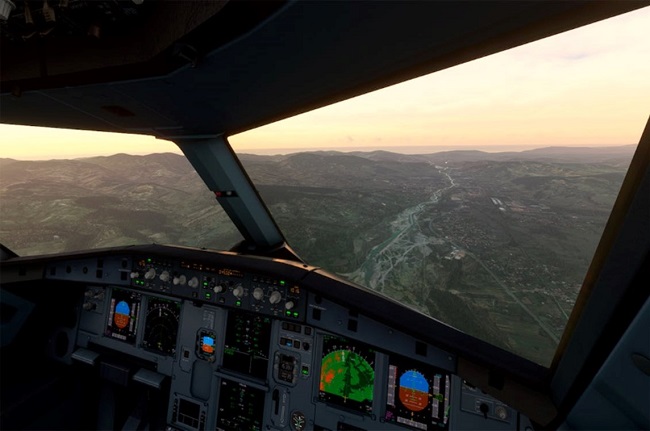
At a towered airport, the tower (almost) always provides you with the current wind conditions with your landing clearance from (usually) a center field direct-reading wind indicator system. Again, just a note: the wind at center field may not be the wind either on the approach lane or the touchdown zone of the runway.
On an approach during a wind event, one sign you might be in for low-level windshear is when your crab angle on final approach is exaggerated or perhaps out of sync with the reported surface wind. Glass cockpits or your trusty EFB may display in real time the winds you are experiencing. When your reported or calculated wind direction is significantly different from the reported wind speed and direction on the ground, plan on encountering some windshear.
Now, a significant point! You are also particularly vulnerable during departures, a critical time period and portion of flight involving several critical operational environments and constraints. You are at full power with no reserves to tap into if you encounter an overwhelming downdraft; you are at a higher angle of attack and slower speed while in proximity to the ground (and obstructions); and you will be at your highest trip weight, which saps climb rate performance. This is not the leg of flight nor the time you want to encounter a violent downdraft or a side gust pushing you off the center line and toward obstructions. Departures into high wind conditions, if you decide to go, require your total focus, your A game, and a very honest assessment of your personal minimums.
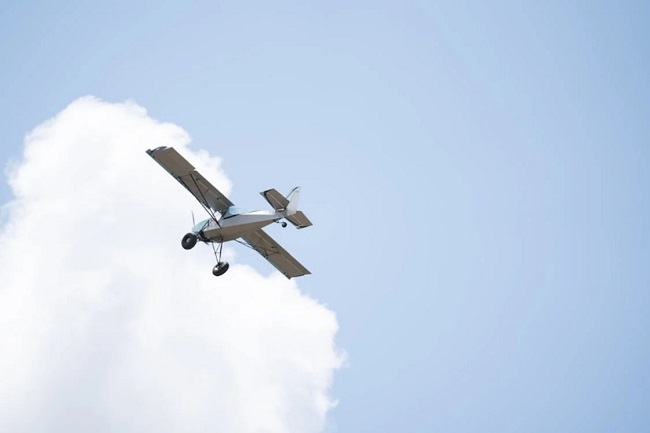
When to fly north to Flagstaff, and as you approach and/or encounter the Mogollon rim, take notice of the big invisible WTF (Welcome to Flagstaff) billboard associated with the visible and very physical rough seat-of-the-pants introduction to our turbulence.
WELCOME TO FLAGSTAFF WHERE FLYING IS ALWAYS A THRILL!!
QUIZ of the MONTH:
- I fly out of a high-altitude, tower-controlled airport where Density Altitude is almost always an issue (except in the dead of winter). The tower makes an ATIS broadcast every hour it is open, bur never tells me the Density Altitude, only to check Density Altitude. Why don’t they just put the Density altitude on the ATIS?
- They really don’t know what it is
- They are not allowed to
- The ATIS system has no computer field to let them do it
- Who cares, It does not really impact me anyway!
- What does the $ (Dollar sign) in the remarks section of a METAR mean?
- The airport is still paying for the AWOS/ASOS system?
- The airport is charging the airport tenents for the AWOS/ASOS system?
- The AWOS/ASAS needs expensive repairs
- The AWOS/ASOS needs some maintenance
- What is the difference between a C140 and a C141?
- Same model except one is fabric and the other is aluminum
- Same model, C140 is 100HP and the C141 is 120HP
- The ain’t no such thing as a C141
- You gotta be kidding me, right??
- OK, you have just passed your commercial pilot check ride - OOHRAH!! You landed a job flying right seat in a Pilatus PC-12NG, You are in 7th heaven, enjoying the view out the right window when the captain leans over and asks you what is ISA at our altitude, FL180? Huh?
- You say “I dunno, never heard of it.”
- Hmmm, let me look in the POH.
- You say, “sure, I got this ‘cause I know exactly what you are asking me.”
- “if I told you I would have to shoot you!.”
- OK, we all know what the stratosphere is, we know what the troposphere is, but what the heck is the tropopause?
- The top of the stratosphere
- The base of the stratosphere
- The top of the troposphere
- The boundary between the top of the earth’s atmosphere and space
(Answers at the bottom of the Safety Program section.)
SAFETY PROGRAMS
Simply log on to the Internet and go to WWW.FAASAFETY.GOV, click on “Seminars” and start checking for any other upcoming seminars. Should you desire a particular safety or educational program at your local airport or pilot meeting in the future, such as the BasicMed program, our “Winter Wonderland” snow season special, ”The Aging Pilot”, Radio Phraseology, or my newest one on LIFR approaches, which discusses the how’s, why’s, and pitfalls of shooting an approach all the way down to minimums and missed approaches, simply call or text me at 410-206-3753 or email me at either This email address is being protected from spambots. You need JavaScript enabled to view it. or This email address is being protected from spambots. You need JavaScript enabled to view it..
Arizona Pilots Association provides the safety programs at no charge. We can also help you organize a program of your choice, and we can recommend programs that your pilot community might really like. There are also a lot of great webinars online, each about an hour long, and worth credits towards your WINGS participation. You might find one that is right up your alley or really “tickles yer fancy”!!
answers:
- b. The FAA’s Air Traffic Control handbook spells out the requirements and limitations regarding ATIS procedures and dates back before ATIS and dictates what can be put onto the ATIS broadcast and DA is not one of the requirements. I guess you could surmise that DA calculations are a pilot responsibility, not ATC’s. Now, having said all that, Tower does have the DA right at their fingertips on the ASOS computer screen display in the cab, so if you want, simply ask them for it.
- d. YUP, system needs some maintenance.
- d. Ok, here ya go –
This is a C140
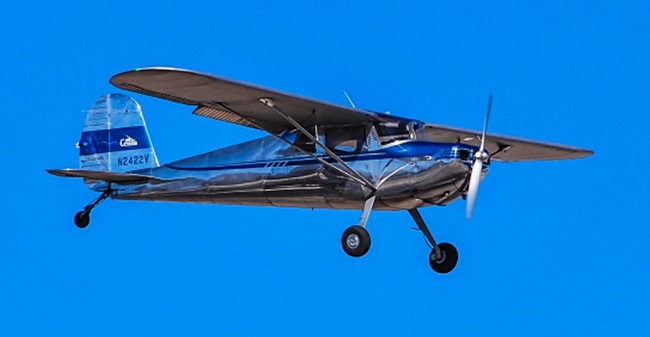
This is a C141. See the difference?
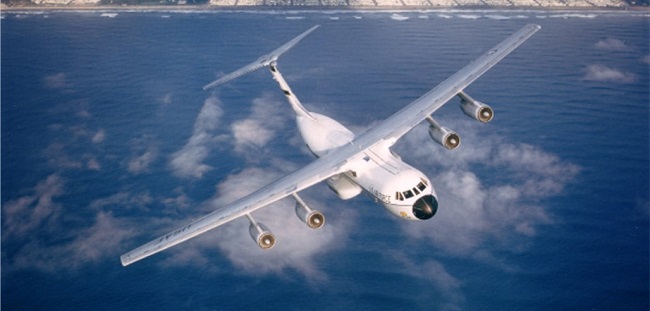
- c. ISA is the abbreviation for International Standard Atmosphere. ISA at FL180 is 500mb pressure and approximately negative 21 degrees Centigrade.
- a. The Tropopause is the boundary between the stratosphere and the troposphere. It is also generally where the JET stream runs.